Top e-commerce trends for 2026 shaping consumer behavior
We see three development areas that are expected to have a particularly major impact on Swedish e-commerce in 2026: the rapid development of AI solutions, the increase in household purchasing power, and social commerce, which continues to take up more space in the digital purchase journey.
AI and agentic commerce
Developments in AI-based shopping are moving fast. For example, Google is increasingly providing AI-generated answers directly in search results, changing how consumers find and consume information. AI-based shopping solutions are becoming increasingly available and visible, but these developments are taking place amid lingering skepticism. This creates a paradox whereby the technology spreads but consumer trust lags behind.
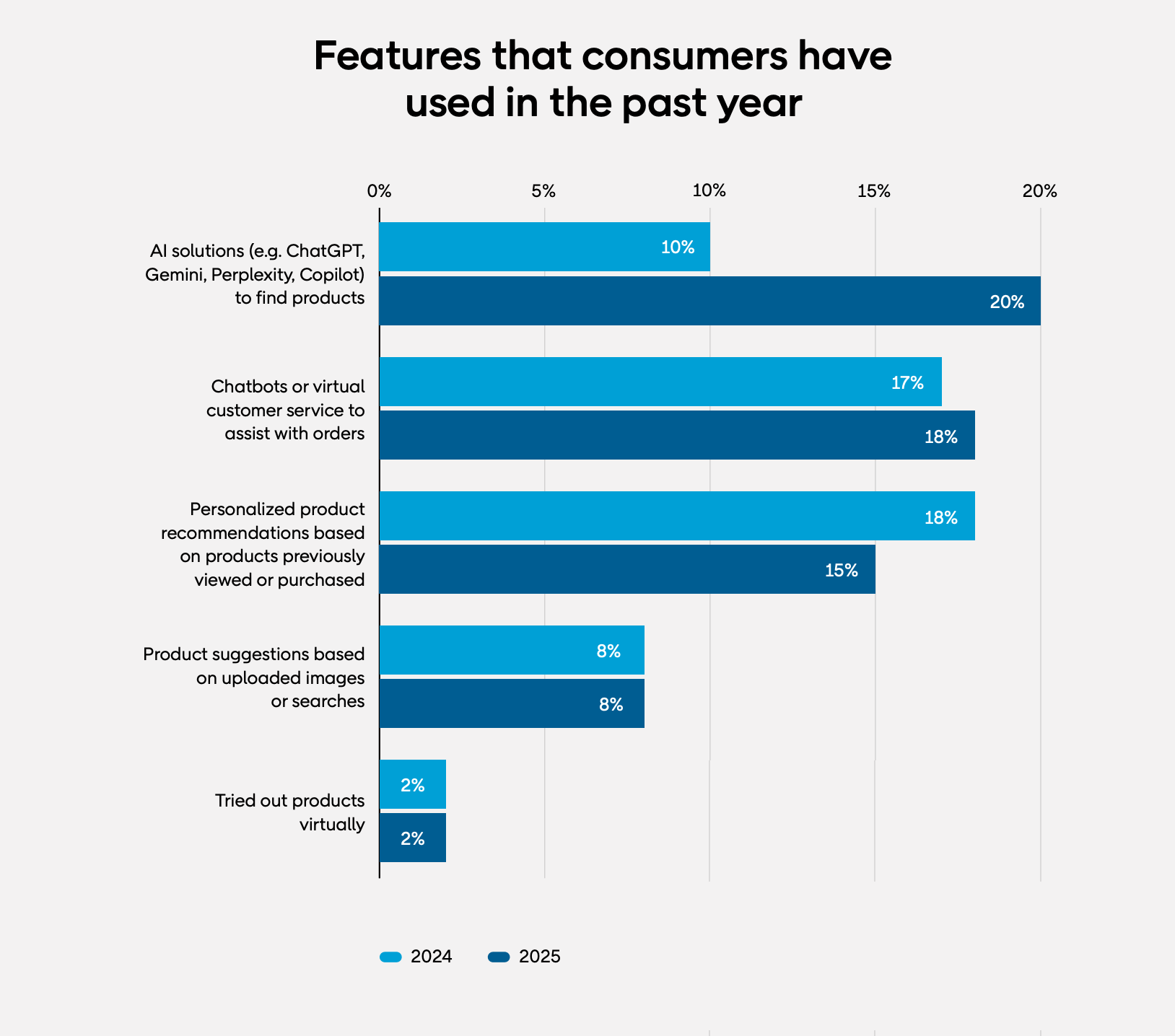
The use of AI agents to assist in e-commerce is increasing significantly. In just one year, the percentage of people using AI agents such as ChatGPT, Gemini or Copilot to find products has increased from 10 percent to 20 percent. In line with this development, OpenAI has introduced a shopping assistant in ChatGPT to help users compare products and make purchasing decisions.
AI growing faster than trust
However, few consumers are in favor of companies using more AI. Many are concerned about disinformation and the fact that AI can manipulate what you think and feel. There are also concerns about fraud and a sense of losing control. In addition, there are ongoing discussions on how the GDPR and related regulations will apply to AI systems in digital environments, including e-commerce.
Understanding of AI is still at a low level, with many consumers using AI without knowing it. This makes it harder for them to see its value and reinforces their wait-and-see attitude. Fifteen percent of consumers state they have received personalized product recommendations based on what they purchased in the past, but the actual percentage is likely to be higher, as not everyone recognizes these recommendations as being AI-based.
AI is thus becoming an increasingly significant part of the shopping experience, while consumer trust is developing more slowly. The fact that its use is increasing while attitudes remain cautious shows that the technology is still at an early stage. So, for AI to have a broader impact, it needs to generate clear perceived added value for the consumer, rather than uncertainty or a sense of a lack of control.
How Google wants to turn AI chat into direct purchases
At a time when AI is rapidly changing the way consumers discover, compare and purchase products, the next big shift is about turning the conversation itself into the purchase. This is according to Paul Mayanja, Head of Retail at Google in Sweden. With the Universal Commerce Protocol, Google wants to create a common standard that makes products directly purchasable in AI-powered dialogs, opening the door to a brand-new era of seamless and agent-driven e-commerce.
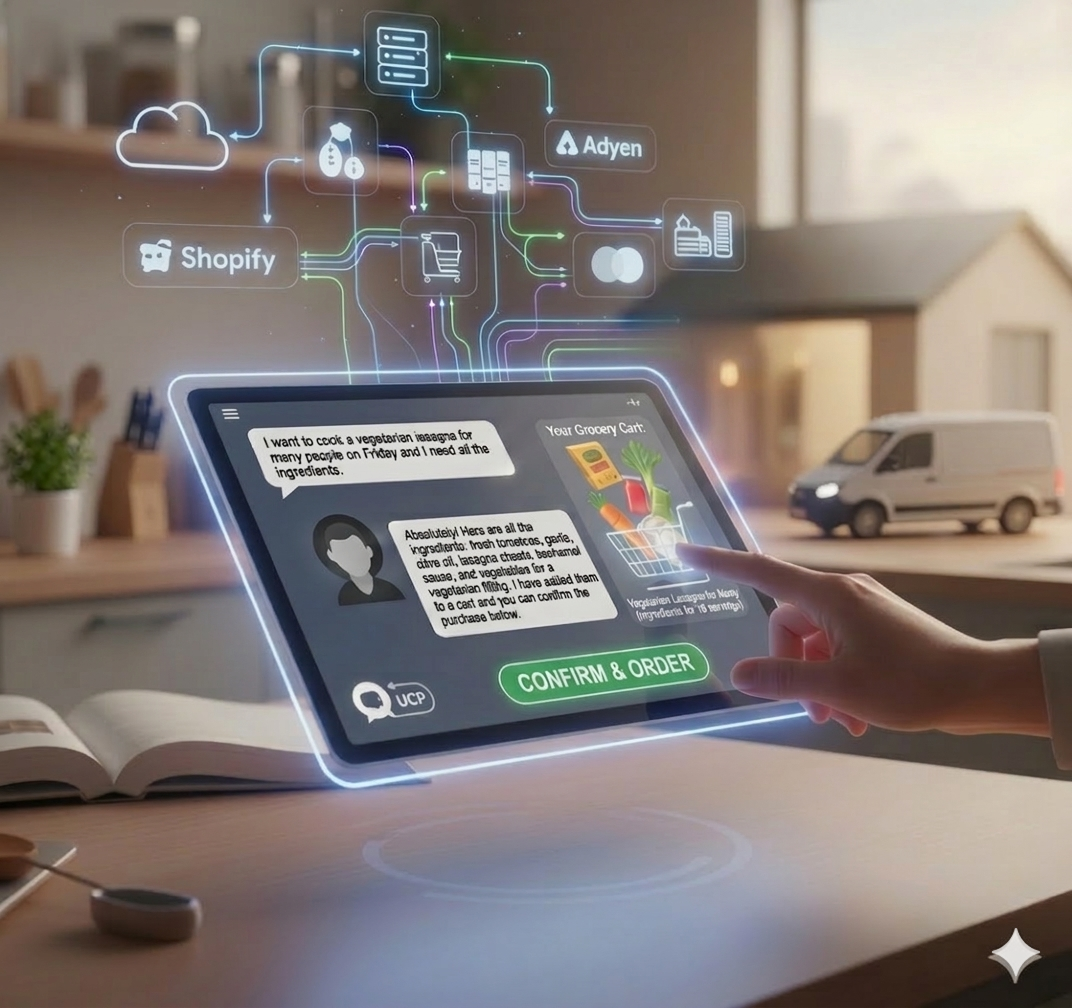
With new AI features in Google Search and assistants such as Gemini, Swedes are searching the internet in brand-new ways – more naturally than before and in a manner more like a conversation. Soon, this will also translate into a much more convenient customer experience.
Imagine saying to your AI assistant: “I'm looking for a new suitcase for my next trip. It should be durable, easy to recognize at the airport, but still stylish. And it needs to have a compartment for my laptop.” You will receive personalized suggestions immediately. You will find a bag you like, quickly join the company’s loyalty program, add some accessories and a luggage tag at check - out, and pay – all without ever leaving the conversation. It is precisely this vision of frictionless commerce that Google now wants to realize.
To achieve this, Google has launched the Universal Commerce Protocol (UCP), a new open-source standard that lays the foundations for agentic e-commerce. The protocol is designed to support the entire purchase journey, from searches to checkout and post-purchase support. Initially, the new protocol will power a checkout feature that allows customers to shop directly from connected retailers in the US while in the process of searching in AI mode or the Gemini app. Standardizing how consumer platforms communicate with e-retailers’ systems and agents tears down technical barriers and reduces friction in the purchase journey.
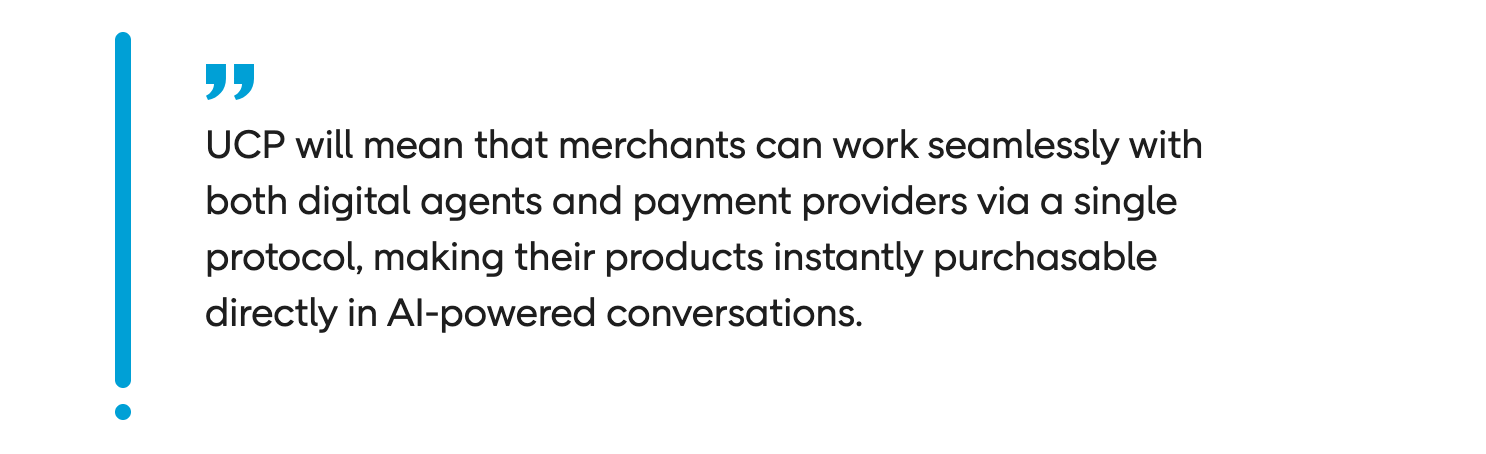
Although the checkout feature is initially being launched in the US, UCP is already supported by major European market participants such as Zalando and Carrefour. When UCP eventually becomes readily available, it will mean that instead of building bespoke and complex integrations for each new AI platform, retailers will be able to work seamlessly with both digital agents and payment providers via a single unified protocol. This makes their products instantly purchasable directly in AI-powered conversations, reducing the risk of abandoned shopping carts.
Developed by Google in partnership with a range of global, industry-leading companies, UCP is built to be flexible and secure, supporting the Agent Payments Protocol (AP2). Another key element is that the retailer retains full control – they remain the Merchant of Record and own their customer relationship. The roadmap includes features such as multi-product shopping carts and links to loyalty programs, positioning UCP as a fundamental infrastructure for the agentic e-commerce of the future.
Google’s objective is to create future commerce that opens new doors for everyone – a future in which customers can use the Google products they love as part of a seamless shopping experience. This allows businesses to build strong customer relationships that extend far beyond a single search or purchase. AI can help at every stage, from exploration and decision-making to delivery and everything else required to create a complete customer experience.
This is not just a technical update, but an invitation to take part in the next major chapter of digital commerce. Market participants that are early adopters of these new opportunities will be best positioned to build stronger customer relationships and win in a future where the line between conversation and conversion is completely erased.
Improvement in the economy
Many consumers are expecting a brighter outlook in 2026 where their finances are concerned. Rising real salaries, lower interest rates and an expansionary fall budget are expected to put more money in Swedes’ pockets this year. This means that more people feel more secure about their finances and have the confidence to spend more.
At the same time, many consumers remain cautious. Despite their more positive view of their personal finances, 47 percent say they will not be spending more money online in any product category in 2026, while 13 percent are unsure. With several challenging years behind them, many people are still choosing to prioritize financial security.
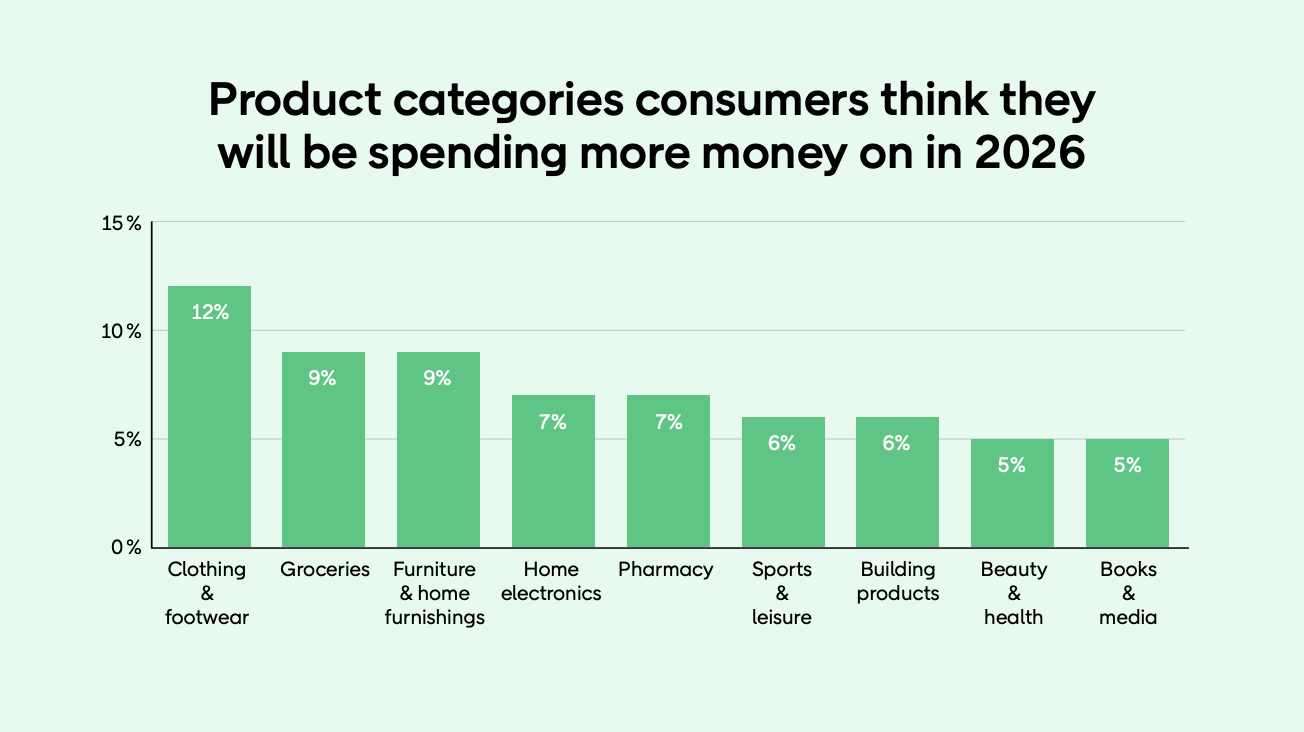
As the economy improves, many consumers will have scope to spend money on things they have not prioritized in recent years. Among the product categories in which most people think they will increase their e-commerce purchases, clothing and footwear tops the list, followed by groceries, furniture and home furnishings and home electronics. The fact that one in ten thinks they will do more grocery shopping online next year can be linked to a willingness to indulge in the convenience of online food shopping. In the case of furniture, furnishings and home electronics, these are largely needs that have been postponed for several years. For example, many people have waited to buy a new sofa, fix up their home office or replace their devices.
There are also clear differences between the sexes. Men are significantly more likely to plan to increase their consumption in home electronics, sports and leisure and DIY, while women are more likely to plan to increase their purchases in beauty.
Finally, there are signs that household finances are rallying and that many purchases consumers have been putting off can now be made. Where e-retailers are concerned, this means new opportunities to meet greater demand.
Social commerce
Social commerce includes marketing products and brands via social media, but also services directly linked to sales platforms in social media feeds. The latter has not yet been widely adopted in Sweden, but is expected to enter the market in the near future.
More than eight of ten consumers have not made a purchase via social media in the past month. Among those who have, Facebook is the most common channel. One reason why more consumers have not made purchases directly on social media is that the availability of these functions is limited in Sweden. The share is currently low, but is expected to increase. TikTok Shop is one example that has developed and taken off in several European markets over the past year and is expected to be available to Swedish consumers in 2026.
However, consumers gain a lot of inspiration for purchases via social media, particularly via TikTok. Formats like these act as a search engine, source of inspiration and store within the user’s own preferred platform. The most common way to research a product from social media is to follow a link from your feed that leads to the brand or online store. Consumers aged 18–29 are more active than the average consumer, with around four of ten following product links or looking up products after having seen them on social media.
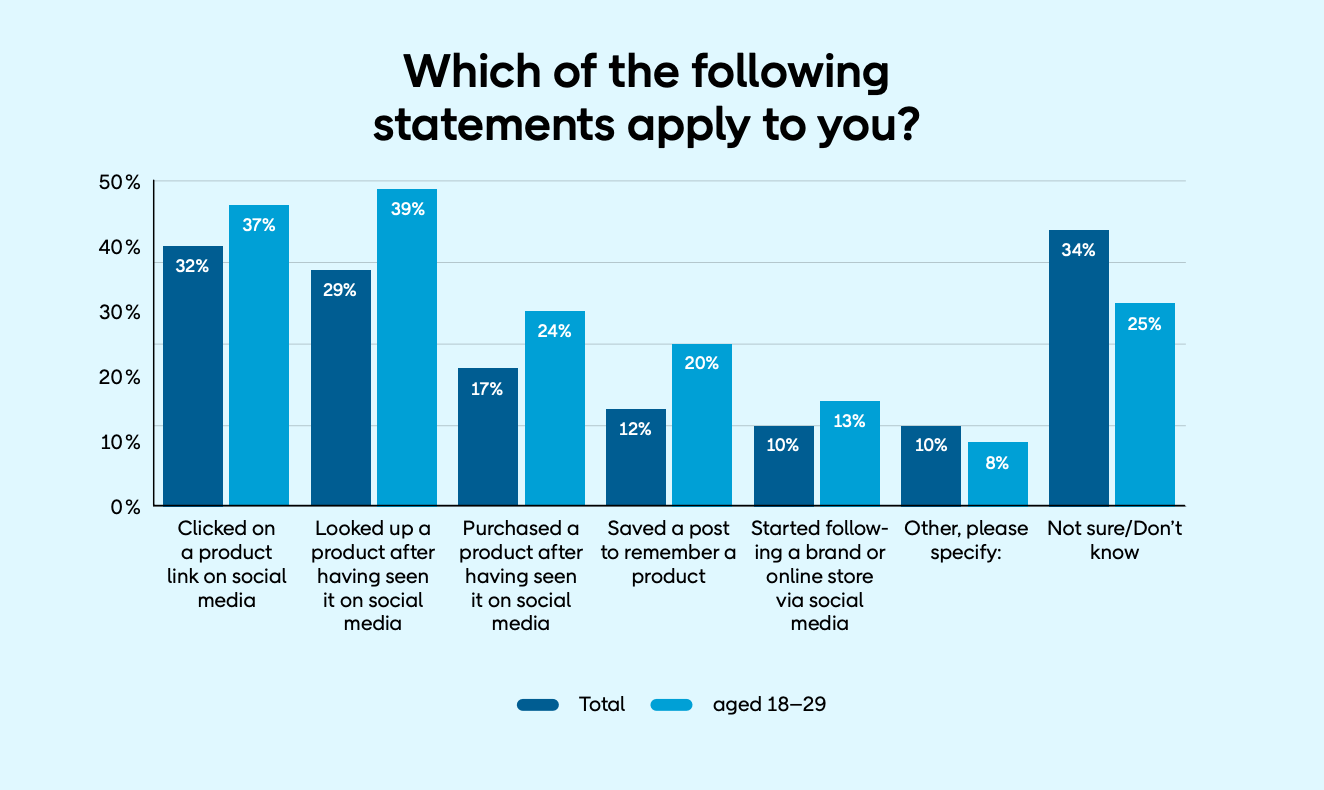
The importance of being at the forefront of social commerce varies depending on the primary target group of the e-retailers. For example, TikTok is a channel that is particularly important for many market participants with a younger target audience. One market participant already exploring social commerce in its marketing in Sweden is beauty and cosmetics chain Kicks, which is moving parts of its content from traditional to social media. This is because the format and pace are appropriate for the content, as well as to create a presence on users’ own platforms.
As social commerce is becoming increasingly widespread, it is important for e-retailers to prepare themselves. They need to be ready for a transition in which consumers’ feeds increasingly influence what is devoted attention and determine what they will purchase and want to see more of.
The purchase journey starts where the consumer is scrolling
Social commerce and the marketing of products and brands have thus become an integral part of social platforms. However, 45 percent of consumers feel that they are not influenced by social media content in their purchasing decisions, but the proportion actually influenced is likely to be higher. Ninety-five percent of purchasing decisions take place in the subconscious, largely influenced by emotions and what other people are doing – which can be found on social media.
The main perception of consumers is that content from brands’ own accounts influence purchasing decisions, closely followed by advertisements and content generated by other users. The youngest consumers stand out when it comes to content generated by other users, being more affected than the average consumer in this regard.
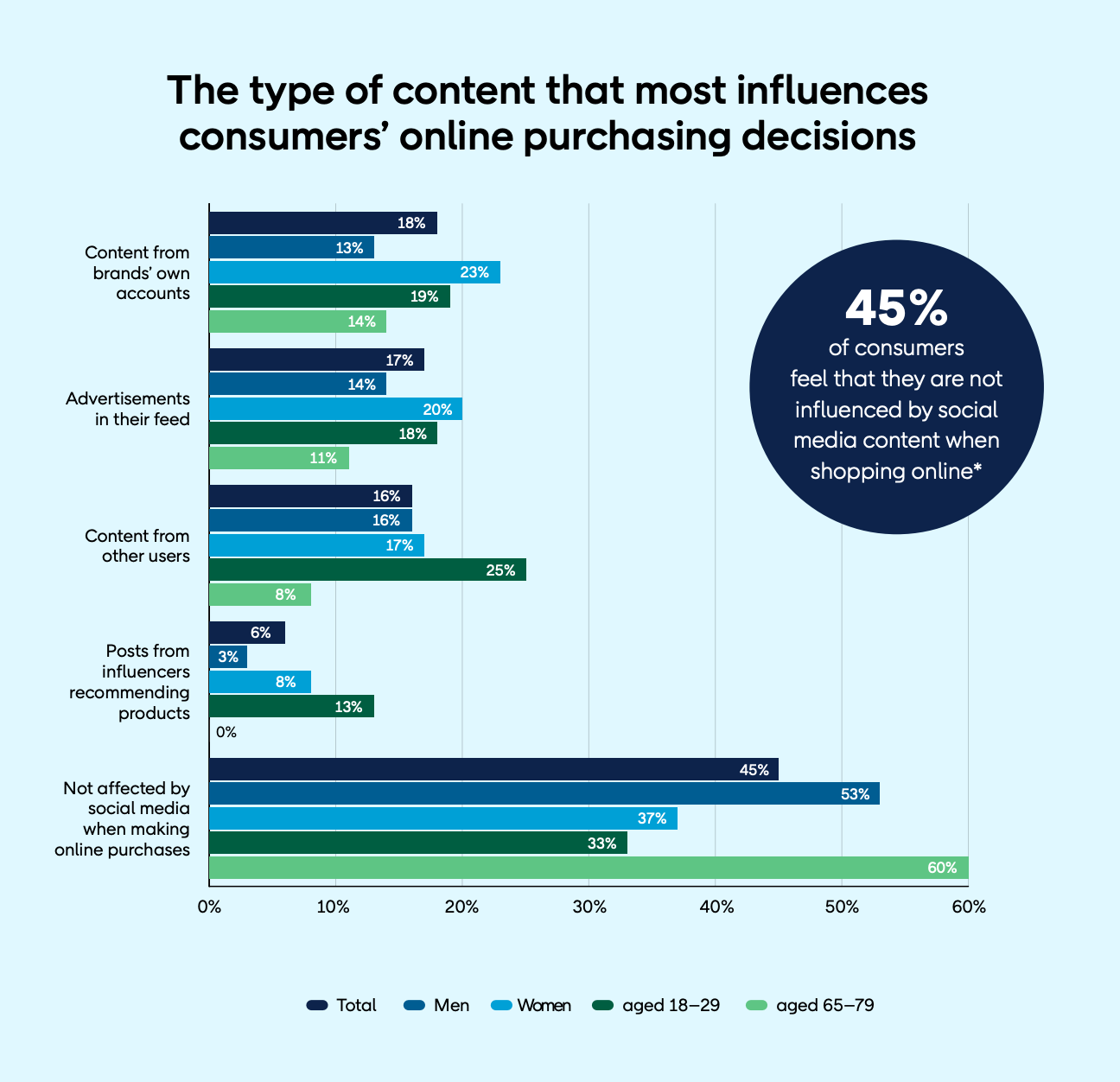
Such UGC content has an impact in that it provides inspiration and acting as a seal of approval. UGC makes it easy for consumers to access ratings and reviews, and the community surrounding the content generates credibility and authenticity, which is increasingly important in a digital world. Inspiration comes from a variety of social media platforms: YouTube, Instagram and Pinterest to name a few. For example, watching instructional videos on YouTube is something that six of ten Swedes have done in the past year. There, users and influencers create content, for example about DIY or renovation, which can inspire people to purchase specific products.
Pinterest is a social platform where many consumers look for inspiration and do research. With the Pinterest Shopping service, users can easily go from idea to purchase via a direct link to products in e-retailers’ online stores. In the US, Pinterest also recently partnered with Walmart, making it possible to add recipe ingredients straight from Pinterest to your Walmart shopping cart.
Purchasing decisions are driven by credible and relevant content, especially content coming directly from brands and from other consumers. The multi-channel marketing landscape is broader and at the same time more niche, meaning that e-retailers have the opportunity to reach out in more ways and need to be well acquainted with their target audience.