Nordic cross-border shopping trends and key insights for e-tailers in 2026
Nordic consumers show diverse patterns in cross-border shopping. More than 40 percent of Nordic consumers shop online from abroad at least monthly. While the Nordic countries share many cultural and economic similarities, cross-border shopping behaviors are shaped by national market conditions and regional factors.
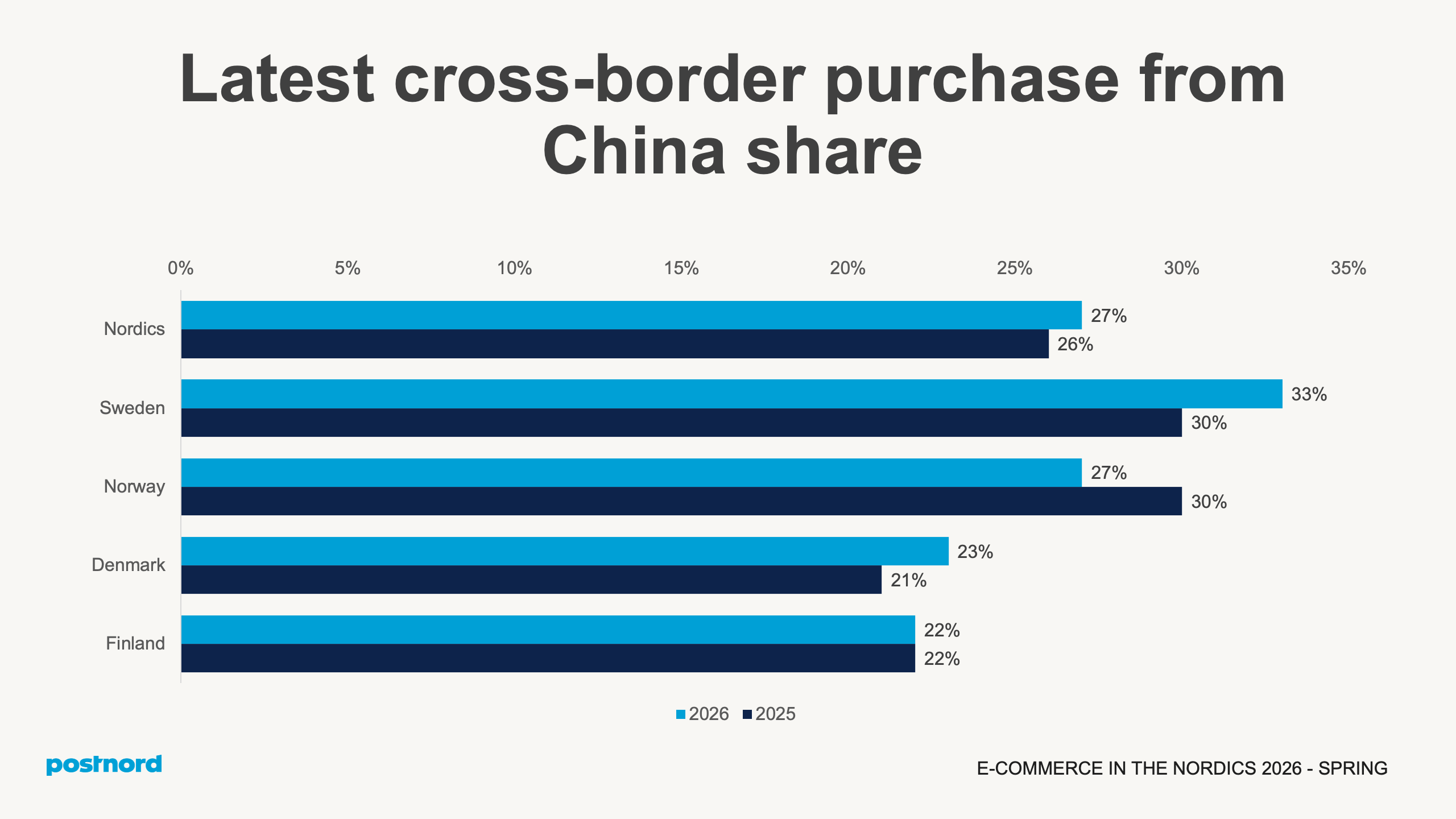
Sweden’s highly developed domestic e-commerce market means Swedes shop less abroad and the country instead becomes a key e-commerce destination for neighboring countries. In Denmark, Finland, and Norway, where domestic e-commerce is less mature, consumers shop abroad more frequently to access competitive prices or products not available locally.
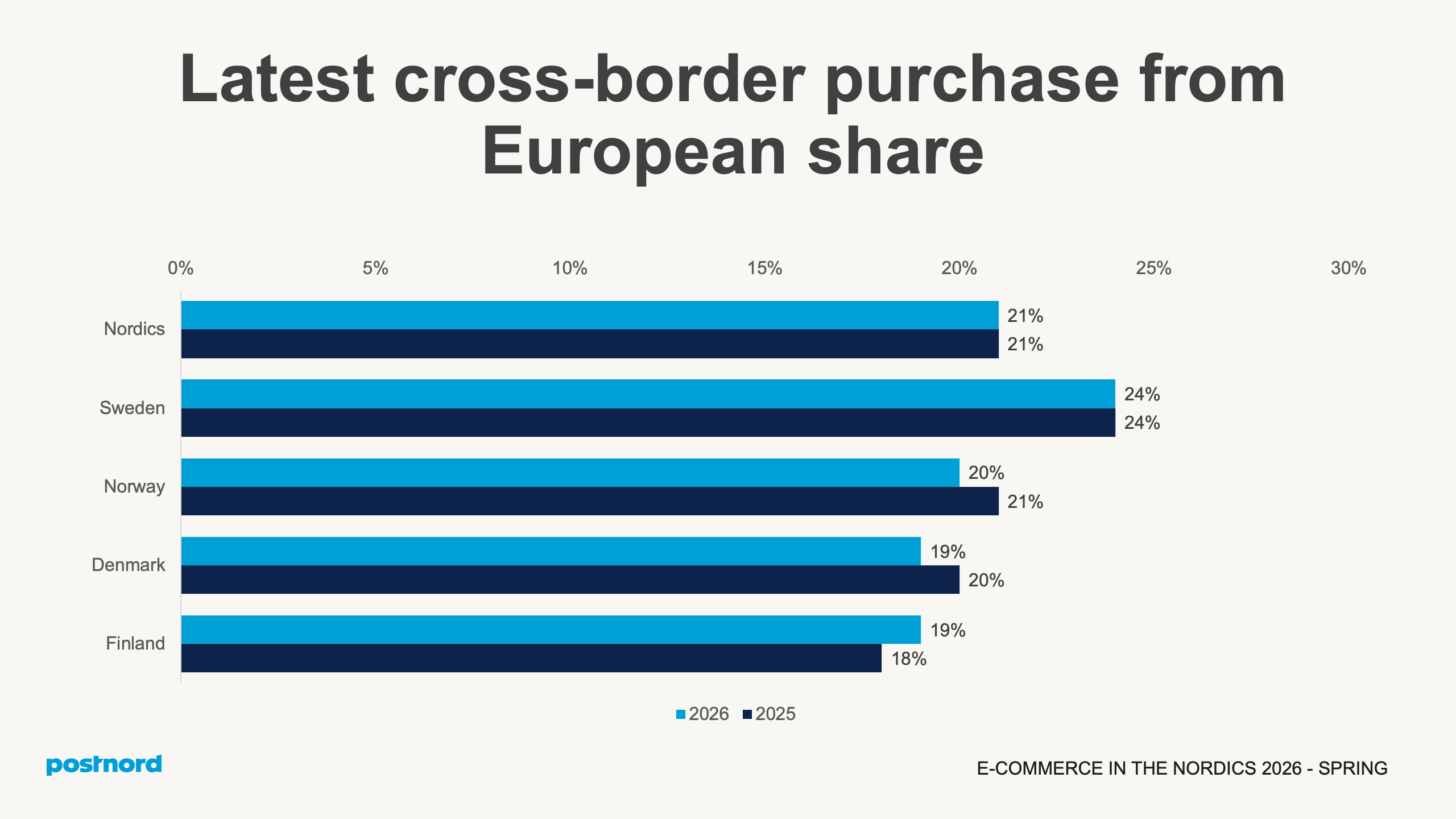
Among the Nordic countries, Swedes tends to be more intra European in its cross-border shopping, reflecting strong integration with nearby European markets. Germany is especially popular in Denmark and Finland, acting as a competitive benchmark for domestic retailers on price and assortment. China serves primarily as a price-driven sourcing market, with strong reach in Sweden and Norway, while the US plays a niche, brand-driven role across the region, limited by distance and trade frictions.
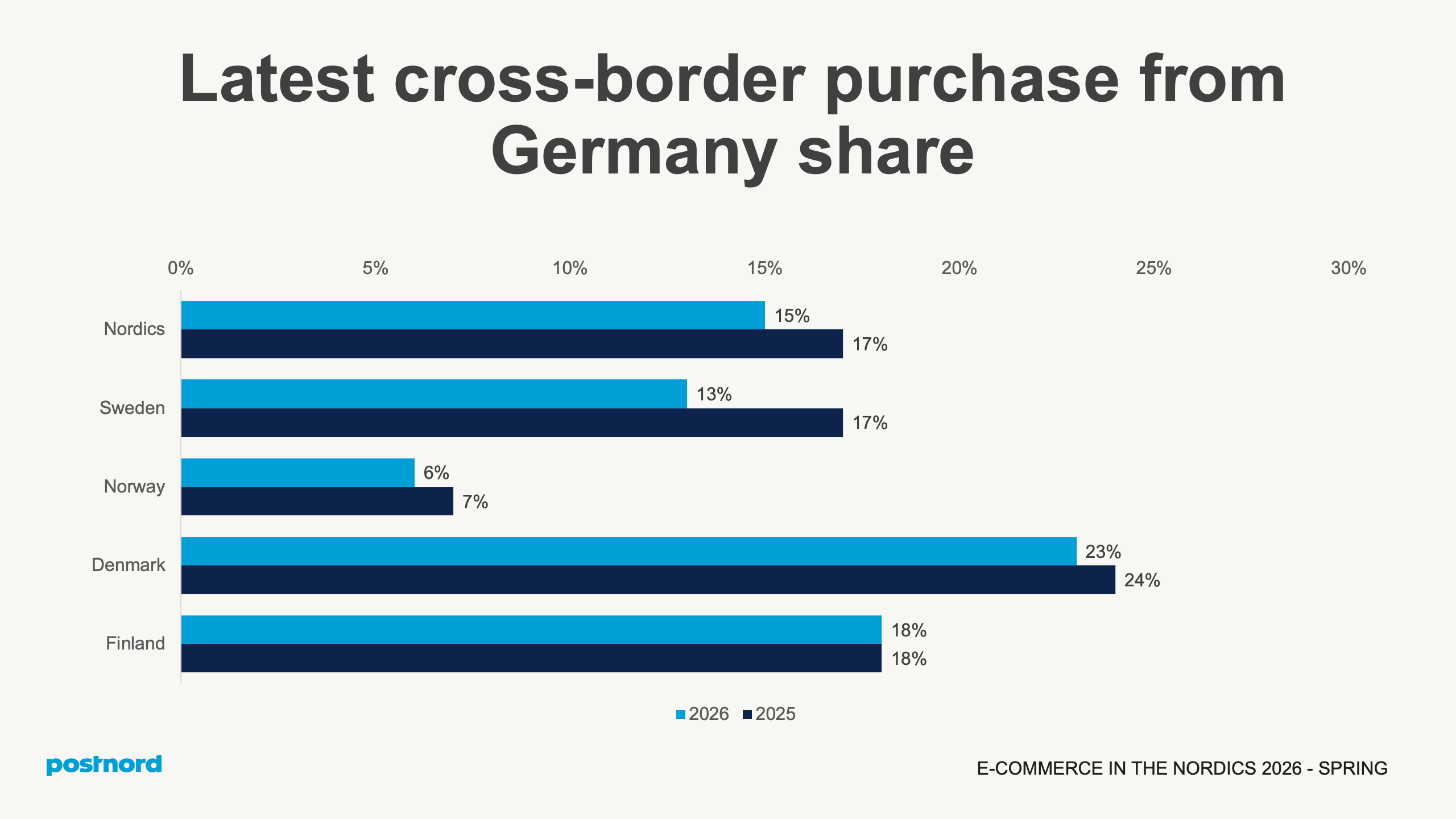
These patterns show that, despite geographic and cultural proximity, each Nordic country has a distinct cross-border shopping profile. For retailers and brands, understanding domestic market maturity and local preferences is just as important as recognizing the broader similarities across the region.
Nordic cross-border shopping
Shopping from international marketplaces has grown rapidly across the Nordics, with platforms such as Temu and Shein capturing an increasing share of online purchases. This shift not only reflects changing consumer behavior but also intensifies competition, as Nordic retailers typically operate under stricter regulations related to consumer protection, product standards, and sustainability. As a result, this is a key development for Nordic e-commerce players to monitor, understand, and respond to.
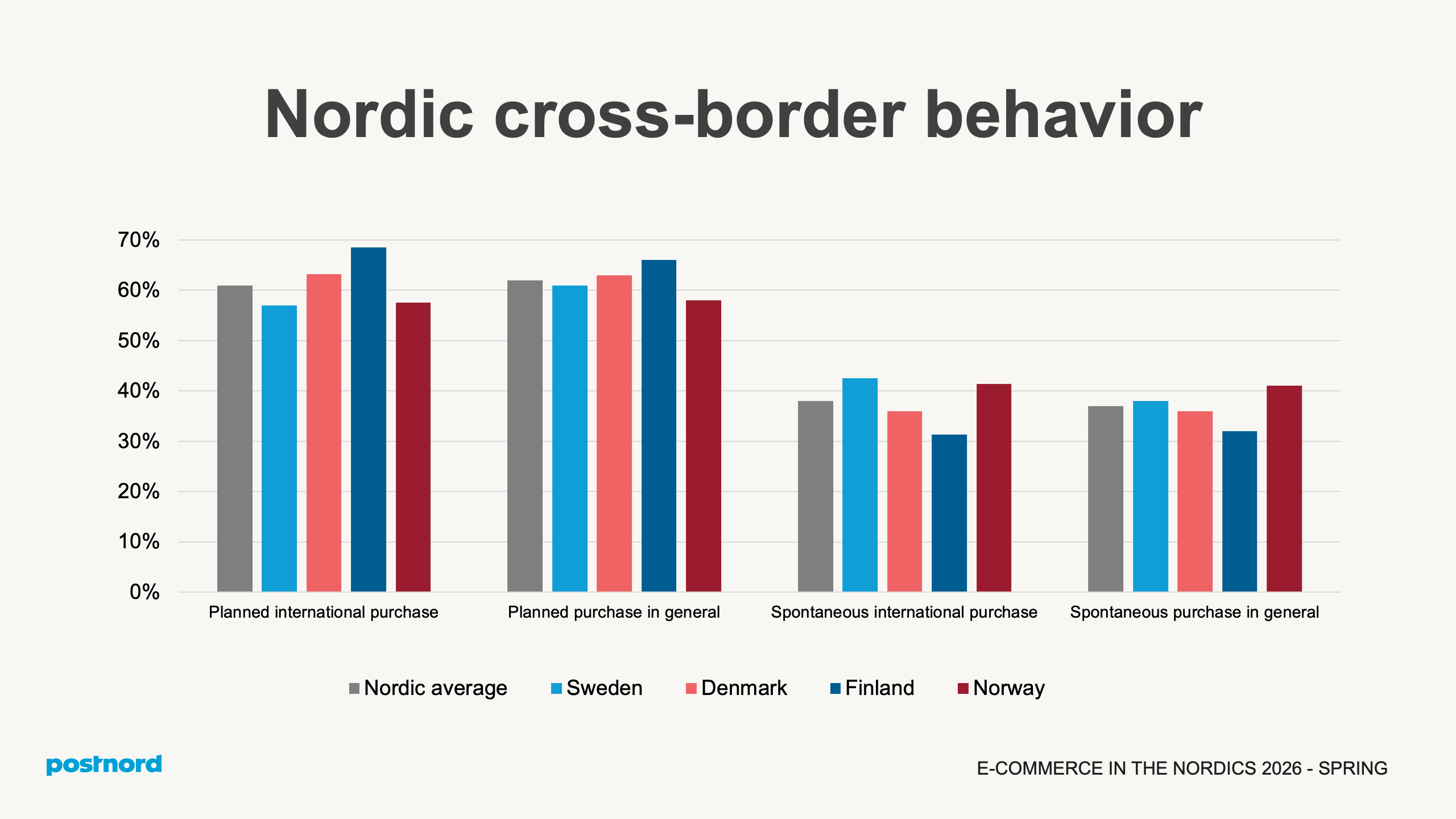
At the Nordic level, the share of planned or somewhat planned purchases is almost identical for international and overall online shopping. This suggests that cross-border e-commerce is not more impulse-driven or more carefully planned than domestic online consumption but rather has become integrated into consumers’ regular online shopping routines.
However, a closer look at individual countries reveals some differences. In Finland, international purchases are more planned than online purchases in general, which could reflect a more deliberate approach to cross-border shopping, potentially driven by price comparison. Compared to their Nordic neighbors, Sweden and Norway seem to have a more opportunistic shopping pattern online.
Looking at what consumers buy adds further context. In the Nordics, clothing and footwear dominate international purchases, with home electronics as the second-largest category. Sweden is the exception, where beauty and health products rank ahead of electronics. One reason could be that international marketplaces make it easier to compare prices across sellers and respond quickly to trends, reinforcing their appeal in these categories.
Overall, cross-border shopping appears to follow similar decision-making patterns as domestic online retail, suggesting that it is becoming an increasingly integrated part of consumers’ online shopping behavior. However, it is still important to recognize that these patterns might differ when it comes to certain online retailers who offer extremely low prices and gamification in their websites, such as Temu for example.
Generations shop differently
International cross-border shopping in the Nordics differs significantly across generations, offering insight into how global marketplaces are spreading among consumers.
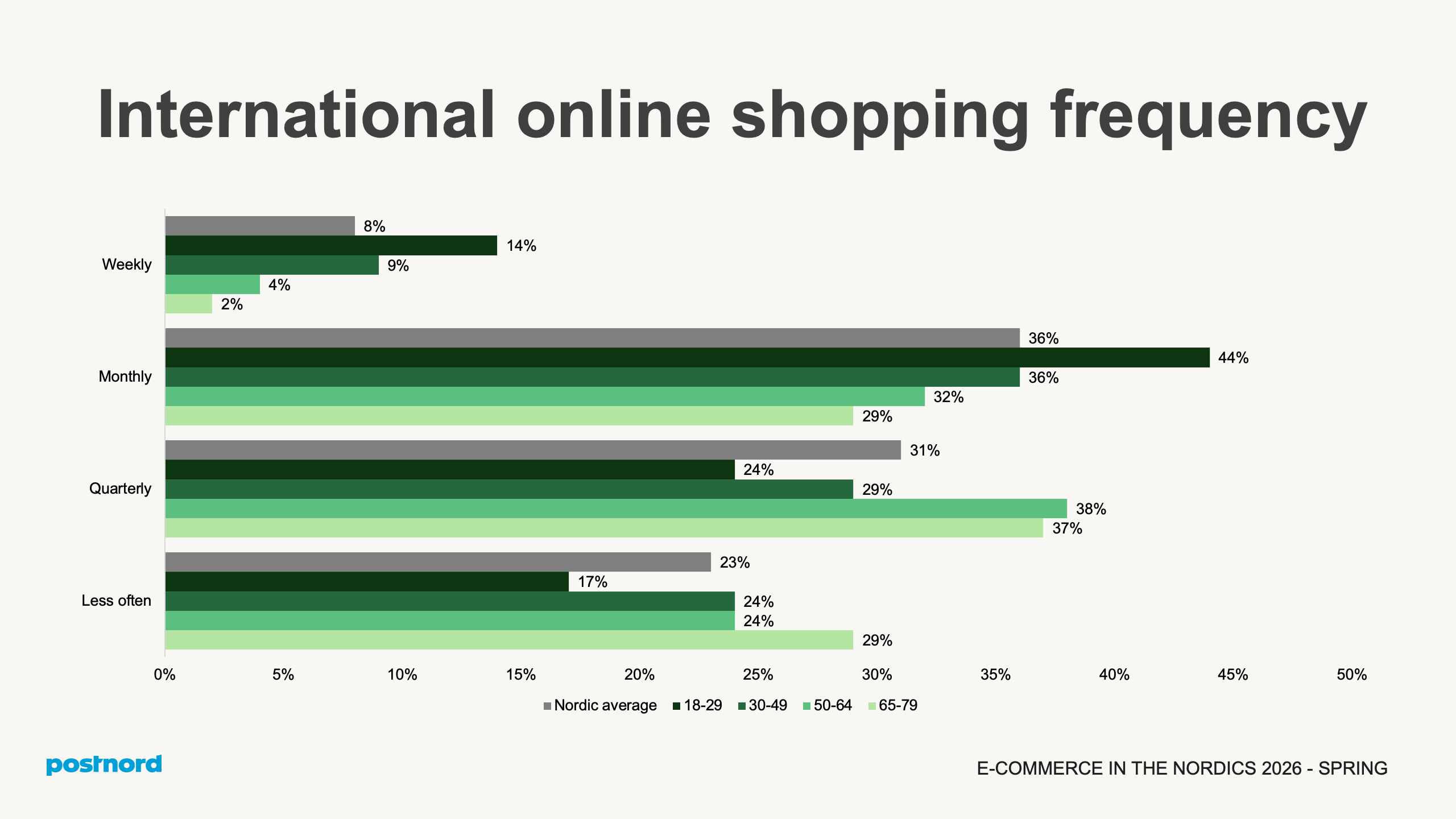
On a Nordic level, younger consumers drive cross-border shopping. Consumers aged 18–29 shop from international websites significantly more often than older groups. This is likely linked to greater exposure to global marketplaces through social media platforms such as TikTok and Instagram, where trends and product recommendations from around the world quickly influence purchasing behavior.
In contrast, older consumers are generally more cautious and shop less frequently from international platforms. For consumers aged 50–64 and 65–79, quarterly purchasing is the most common frequency when shopping cross-border. However, price can shift behavior: Temu stands out as the one international marketplace where older consumers are relatively more active, likely due to the lower prices and wide product range that many Nordic consumers associate with Chinese platforms.
Platform preferences further highlight these differences. Younger consumers tend to favor platforms such as Zalando and Amazon, where fast delivery, customer reviews, and loyalty programs like Amazon Prime support frequent and habitual shopping.
Looking ahead, regulatory changes may influence these patterns for international e-commerce. The planned removal of the €150 customs duty exemption in 2026 could make cross-border purchases less spontaneous and more carefully planned.
Nordic consumers embrace e-commerce but show notable differences
Online shopping is highly popular among Nordic consumers, with 86 percent having shopped online in the past 30 days.
When it comes to how these purchases are delivered, preferences differ across the Nordic countries. In Sweden, home delivery is the most common option, whereas consumers in Denmark and Norway most often collect their parcels from service points. Finland stands out, where parcel lockers are the most common. In addition to these differences, parcel lockers are becoming an increasingly common delivery option across the Nordics, although adoption levels vary. In Finland and Sweden, a significantly higher share of consumers collected their most recent parcel from a locker compared to in Denmark and Norway. Importantly, more consumers say they prefer parcel locker delivery than those who actually used it for their most recent delivery, indicating strong potential for future growth in all countries.
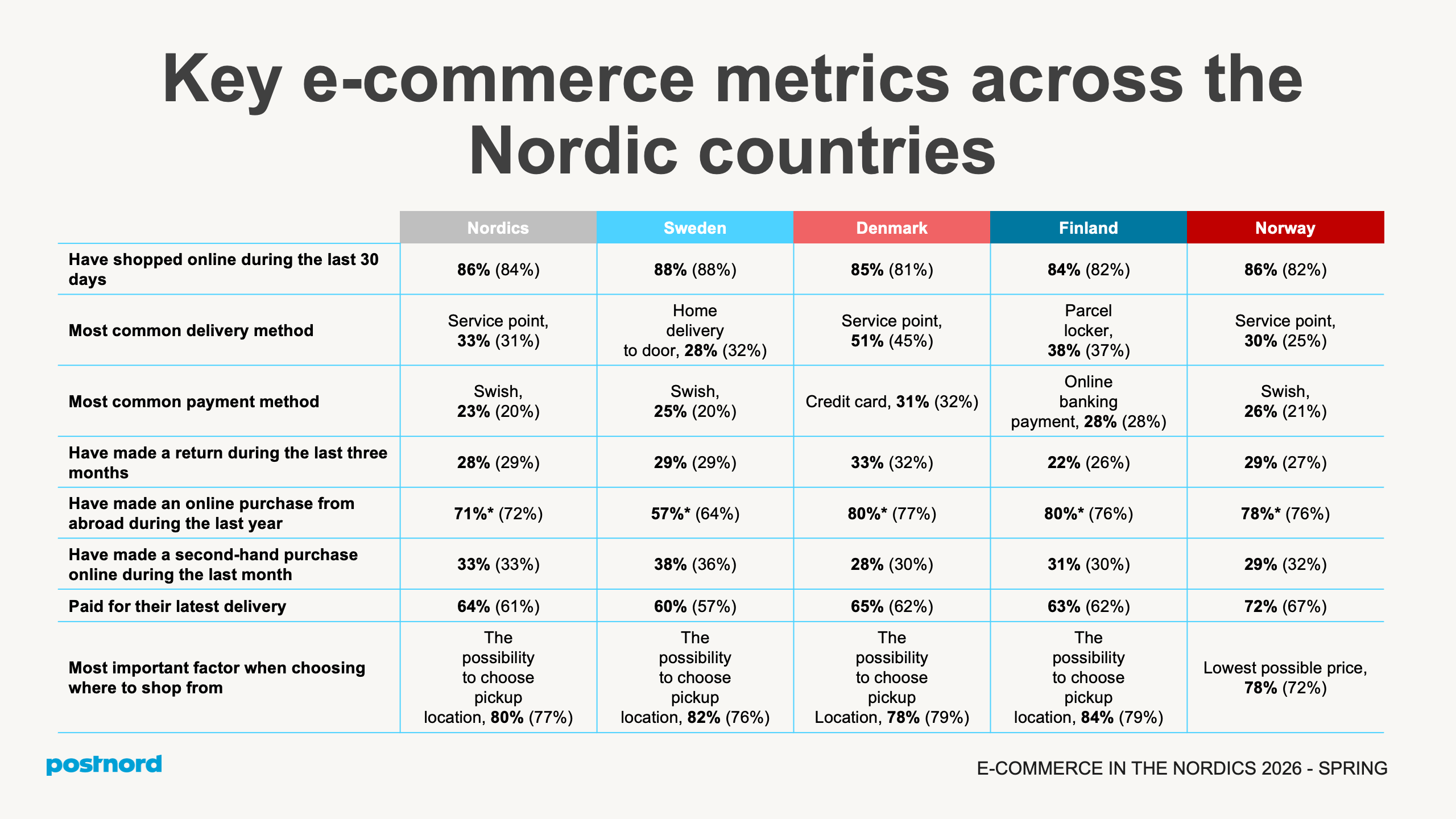
Swish/Vipps/MobilePay has emerged as the most popular payment method in the Nordics. However, adoption varies across countries. Swish/Vipps/MobilePay is the most commonly used payment method in Sweden and Norway and is also widely used in Denmark, with 29 percent of consumers using it for their latest online purchase. Finland, however, stands out with a significantly lower adoption rate at just 9 percent.
Approximately 3 out of 10 Nordic consumers have made a return during the last three months. Since last year, the return rate among Finnish consumers has decreased the most from an already low level compared to the other Nordic countries, widening the gap even further. This may partly be explained by Finnish consumers planning their purchases more carefully, particularly when shopping from abroad, contributing to fewer returns.
Cross-border shopping habits differ between the Nordic countries. Danish and Finnish consumers shop abroad the most, with around 8 out of 10 having made a cross-border purchase in the past year. Swedish consumers shop abroad the least, with 57 percent having done so. This is partly explained by Sweden having a more mature e-commerce market.
Second-hand shopping patterns also vary across the Nordics. Sweden stands out as the most active market, with almost four in ten consumers having made a second-hand purchase in the past month. The overall Nordic share of consumers who have done so is closer to 3 in 10 consumer.
Paying for delivery is becoming increasingly common across the Nordics. The ability to choose a pickup location has also become more important and continues to be the most important factor when deciding where to shop in most countries. This may reflect a growing willingness to pay for convenience, as consumers place higher value on flexible delivery options. Norwegian consumers stand out prioritizing the lowest price the highest. This marks a shift from last year, when the ability to choose delivery method was their top priority.
Although the Nordic countries share many common traits, there are also differences in key aspects of e-commerce. To effectively reach Nordic consumers e-commerce businesses must adjust their offers to reflect local preferences.