
The Nordics is positioned for growth
2025 marked a year of recovery for both consumers and retailers across the Nordics. Although geopolitical tensions remain high and consumers continue to be cautious, households have gradually regained purchasing power as inflation stabilized and interest rates began to ease. After several years of postponed spending, many consumers enter 2026 with a pent-up demand and have increasingly started to adapt to uncertainty.
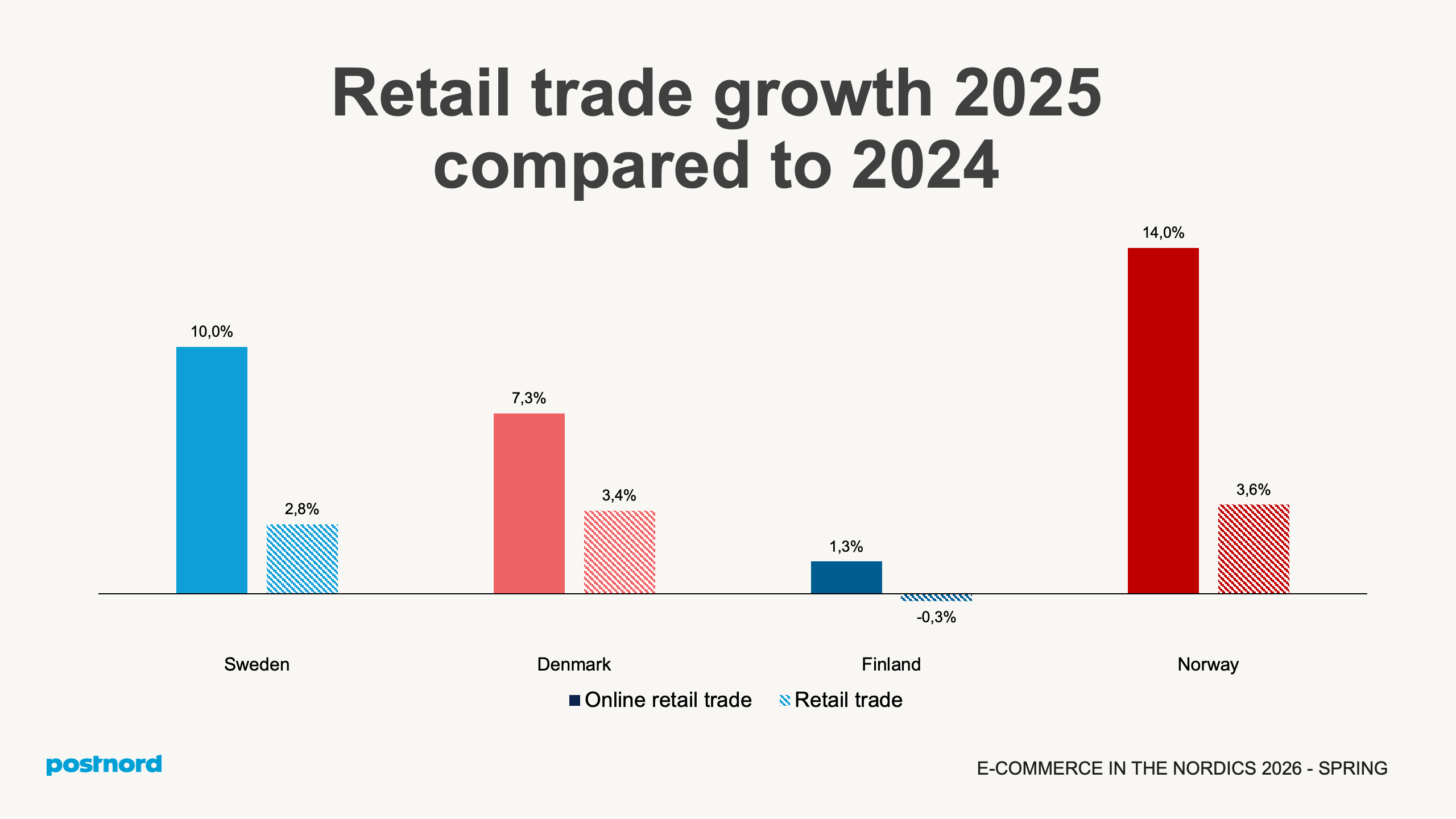
Online retail continue to drive retail growth across the Nordics. Many consumers are more price-aware than before the inflation surge, leading to continued high levels of price comparison and promotion sensitivity.
However, the pace of recovery differs across the Nordics. Norway and Sweden show the strongest growth during 2025. In Norway, strong household incomes and a lower unemployment rate have supported consumer spending despite somewhat higher inflation. Denmark also sees rising consumption driven by higher real wages and employment. In Sweden, falling inflation and easing interest rates have helped households gradually regain confidence after several years of cautious spending. Finland continues to lag behind due to higher unemployment, weaker economic growth and significantly lower consumer confidence.
Looking ahead, geopolitical uncertainty remains a key factor. 2026 has already been marked by several major events, and more are expected, including upcoming elections in Denmark and Sweden. Further, the war in the Middle East continues to create volatility in global markets and energy prices, which could affect Nordic consumer spending if prolonged and if the Strait of Hormuz remains disrupted. Regulatory changes may also impact the market. The removal of the EUR 150 customs duty exemption for goods shipped from third countries to EU consumers could reduce cross-border e-commerce and shift demand toward more domestic or EU-based purchases.
For retailers, understanding how shifts in Nordic consumer behavior are interconnected to current events will be key to navigating the market in the year ahead
Nordic consumers are highly digital in their purchasing behavior, with more than 8 out of 10 shopping online monthly. At an overall Nordic level, key aspects such as most common delivery method and return frequency have remained relatively stable in the last three years, while continuing to evolve at the country level.
In contrast, payment behavior has seen a more rapid change. Since 2024, Swish/Vipps/MobilePay has been the most preferred payment method in the Nordics, while credit cards have been the most used. This year, Swish/Vipps /MobilePay has surpassed credit cards to become both the most used and the most preferred payment method.
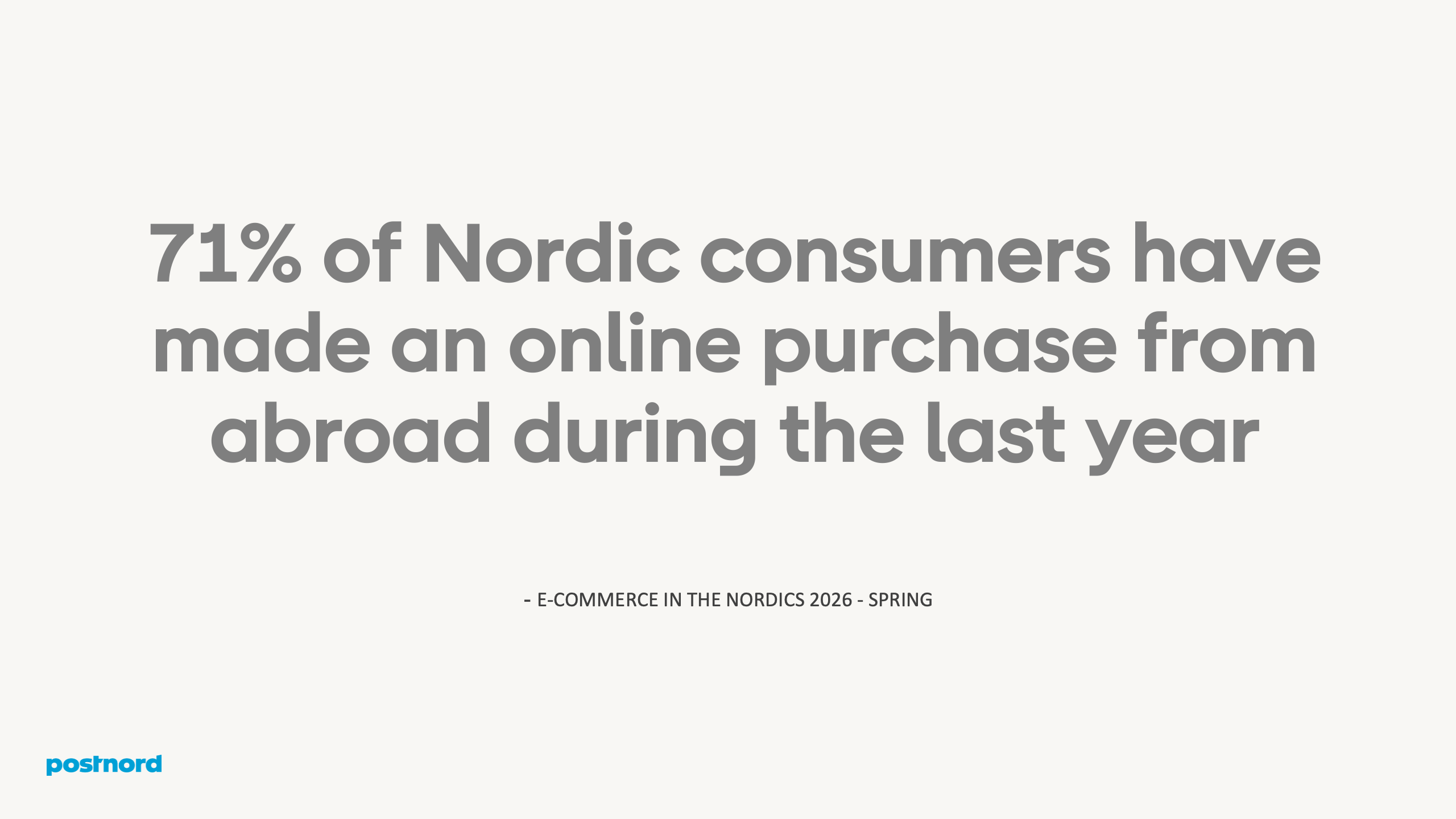
Cross-border shopping is another important aspect of Nordic e-commerce and is widely embraced across the region. More than 7 out of 10 Nordic consumers have made cross-border purchases in the past year, with China as the most common country of origin. Within the Nordic region, Sweden is the most popular country for cross-border shopping. The top product categories purchased both domestically and cross-boarder are clothing and footwear, followed by home electronics, and beauty and health products.
Not only do the Nordic consumers shop internationally to a great extent, but they also embrace circular commerce. 1 in 3 Nordic consumers bought second-hand goods in the past month, and a slightly higher share has sold second-hand goods during the same period.
Overall, Nordic consumers are highly digital and active, balancing convenience, price sensitivity, and sustainability in their online purchasing behavior.
Nordic e-commerce behavior
Nordic consumers are highly digital in their purchasing behavior, with more than 8 out of 10 shopping online monthly. At an overall Nordic level, key aspects such as most common delivery method and return frequency have remained relatively stable in the last three years, while continuing to evolve at the country level.
|
2024 |
2025 |
2026 |
|
|
Have shopped online during the last 30 days |
83% |
84% |
86% |
|
Most common delivery method: service point |
34% |
31% |
33% |
|
Most common payment method: Swish/Vipps |
17% |
20% |
23% |
|
Have made a return during the last three months |
29% |
29% |
28% |
|
Most popular country for latest purchase from abroad: China |
23% |
26% |
27% |
|
Have bought second-hand items online the last month |
30% |
33% |
33% |
In contrast, payment behavior has seen a more rapid change. Since 2024, Swish/Vipps/MobilePay has been the most preferred payment method in the Nordics, while credit cards have been the most used. This year, Swish/Vipps /MobilePay has surpassed credit cards to become both the most used and the most preferred payment method.
Cross-border shopping is another important aspect of Nordic e-commerce and is widely embraced across the region. More than 7 out of 10 Nordic consumers have made cross-border purchases in the past year, with China as the most common country of origin. Within the Nordic region, Sweden is the most popular country for cross-border shopping. The top product categories purchased both domestically and cross-boarder are clothing and footwear, followed by home electronics, and beauty and health products.
Not only do the Nordic consumers shop internationally to a great extent, but they also embrace circular commerce. 1 in 3 Nordic consumers bought second-hand goods in the past month, and a slightly higher share has sold second-hand goods during the same period.
Overall, Nordic consumers are highly digital and active, balancing convenience, price sensitivity, and sustainability in their online purchasing behavior.
